

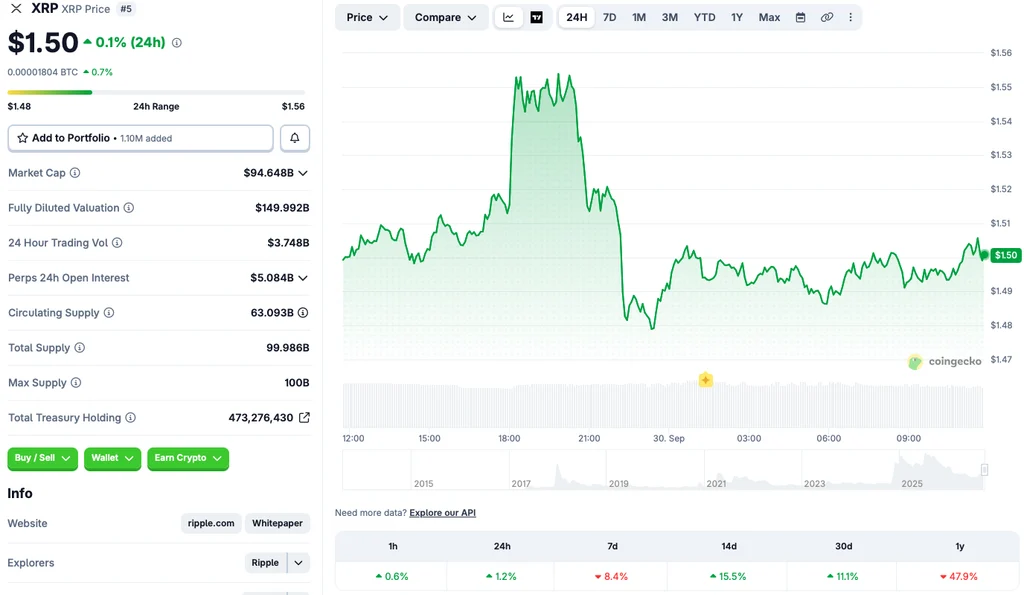
Ripple’s XRP token currently encounters immediate resistance between $1.50 and $1.55. According to CoinGecko data, XRP has registered an 8.4% decline on the weekly charts and a nearly 48% drop over the past year, though it maintains positive movement on the daily, 14-day, and monthly timeframes. This price prediction analysis explores the reasons behind XRP’s current struggles and examines when it might recapture the $3 threshold.
XRP Price Prediction: When Will It Hit $3 Again?
The last time XRP traded above $3 was in early October 2025. The digital asset experienced a strong bullish run in 2025, reaching an all-time high of $3.65 in July. Nevertheless, the wider cryptocurrency market shifted into a bear market in late October, dragging down the majority of major tokens.
During a market-wide recovery in late August and early September, XRP experienced upward price momentum. This rally proved brief, however, because the Federal Reserve opted to increase interest rates to address escalating inflation.
A potential recovery for XRP could materialize toward the close of this year. Numerous analysts expect the cryptocurrency market to bounce back by the end of 2026, with Bernstein forecasting that Bitcoin (BTC) will return to $100,000 later in the year. A move by BTC to $100,000 might spark a fresh bull market, during which XRP could potentially reach $3.
Also Read: XRP Price: Can Bulls Push XRP Above $1.60 This Week?
Another key element capable of influencing XRP’s valuation is the ongoing US-Iran conflict. The persistent warfare has driven significant volatility in oil prices. Should the two nations reach an agreement, energy costs could stabilize and help moderate inflation metrics. This type of outcome might encourage the Federal Reserve to reduce interest rates. Lower rates typically encourage capital to flow into riskier assets, meaning XRP and other cryptocurrencies could experience heightened investment inflows in that scenario.
Even so, the outlook for the cryptocurrency market remains largely uncertain. Valuations could move in either direction, as market trends hinge heavily on broader macroeconomic conditions.