

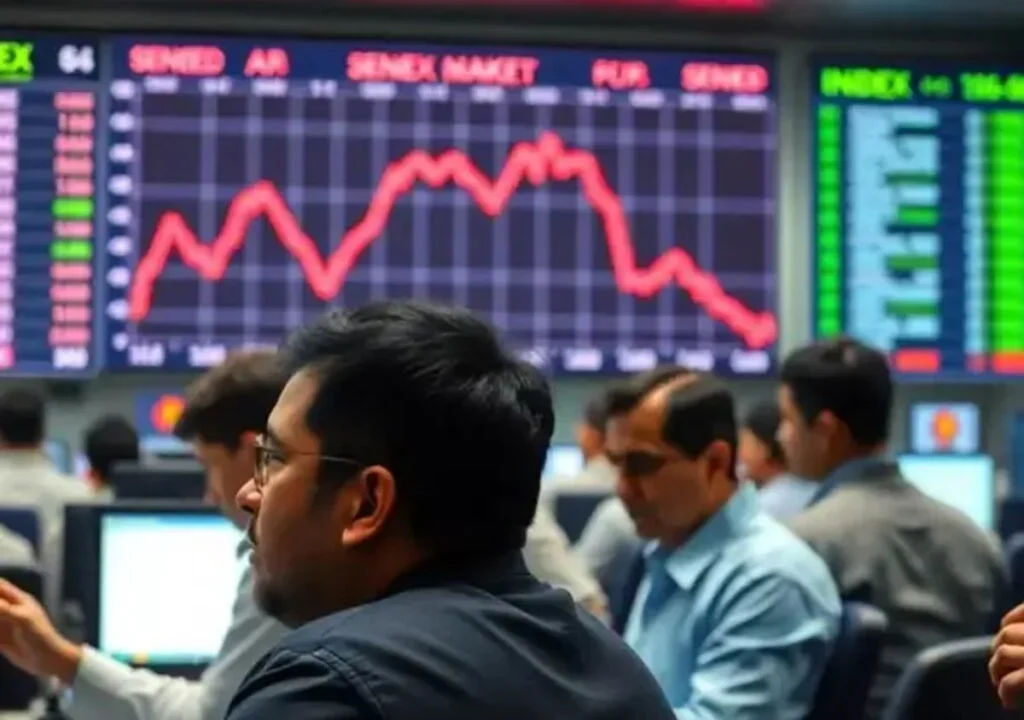
Shortly after the opening bell on Monday, India’s benchmark stock indexes—the Sensex and Nifty—suffered a sharp downturn. The Sensex dropped by over 1,000 points during the session, while the Nifty tumbled 300 points. This sudden slide has alarmed retail investors, leaving the majority of their portfolios in negative territory. With the Nifty sinking to the 22,800 threshold and the Sensex retreating into the 72,900 range, both indexes have touched lows not seen since May 2024, indicating that the broader market has effectively stagnated for two and a half years.
Also Read: When Will Nvidia Stock Go Down? Here’s What Could Trigger It
Sensex and Nifty Crash: 3 Reasons India’s Stock Market Is Plunging
- Foreign Institutional Investors (FIIs) Continue To Sell: Recent figures reveal that FIIs offloaded $384.67 million in equities on Friday, whereas domestic institutional investors (DIIs) purchased $295.63 million. This resulting deficit of $89.04 million at the market close has triggered market anxiety on Monday. Sustained, record-level selling by FIIs continues to weigh heavily on the Sensex and Nifty.
- Brent Oil Rises Above $106: Even though crude oil declined to $93 per barrel on Monday, Brent crude climbed to $107, marking a 2.9% intraday surge that has sparked worries over elevated borrowing expenses. This upward movement threatens to drive up fuel, logistics, and commodity expenses, ultimately stoking broader inflation. Because economic sectors are deeply interconnected, the stock market absorbs these shocks first, leaving India’s Sensex and Nifty to bear the brunt.
- The Great Tax Burden: As the foundational pillars of India’s equity markets, the Sensex and Nifty currently rest on precarious ground. Retail participants are bearing the initial impact following the government’s July 2024 decision to raise Short Term Capital Gains (STCG) tax from 15% to 20%, and Long Term Capital Gains (LTCG) tax from 10% to 12.5%. Market stability has faltered ever since, as these heavier levies weigh heavily on traders. By cutting into profit margins, the increased taxation has severely dampened retail sentiment.